Thursday, November 22, 2012

Tunes on Thanksgiving

Today is Thanksgiving. (For some.) It's my first ever in the Twin Cities metro. Here's what I'll be spinning.

8:30am - Keep Your Hands on the Plow - Charlie Parr - Because today we're staying local, and we're celebrating the harvest.

"Keep Your Hands on the Plow"

9:30am - Dark So Gold - The Pines - Because we're staying local, and it's almost December. They're playing with Dead Man Winter at The Varsity tomorrow.

11:15am - Blonde on Blonde - Bob Dylan - Kitchen music. Somebody got lucky/but it was an accident.


12:15am - "Alice's Restaurant Massacre" - Arlo Guthrie  - In Connecticut this used to come on 102.1 right after you got home from the Manchester Road Race.

12:40pm - Twin Cities Funk & Soul - Various Artists - To burn some caffeine while we cook, to justify expected caloric intake, and to prep for Black Friday at the Electric Fetus. The first time I heard "Wee" Willie Walker I thought he was Sam.


"There Goes My Used To Be"

2:00pm - Sound Collage: Napping

2:45pm - Bitter Drink, Bitter Moon - Murder By Death - Finishing in the kitchen; fixing a drink. They're playing at Hymie's on Sunday before they open for The Hold Steady.

4:00pm - Amazing Grace - Aretha Franklin -I intend to force this on my family over cocktails. I will explain about how it is important for my niece to pay close attention.

"What A Friend We Have In Jesus"

10:00pm - The Last Waltz - The Band - This movie gave Craig Finn inspiration to form The Hold Steady. Thankfulness to The Band and all the Fellahs! 


"Such A Night"

11:45pm - Sunshine Daydream - The Grateful Dead, August 1972 (Veneta, OR) - Thanksgiving is a harvest celebration, but to get here you gotta make it through the summer heat. Goddamn.

~tc

Friday, November 16, 2012

When The Change Was Made Uptown...


I stood watching the Bruce and E Street these past few nights not only thinking about how fantastic the band still is but how incredibly lucky we are as fans to all share in these shows.  With Springsteen at 63 and Jake Clemons triumphantly honoring his uncle wearing literally Clarence’s shoes, these nights have become a celebration of one of the greatest bands in history.  With hundreds of songs to draw from, the band makes it feel as if you are seeing a special show every single night out. 

(For me, these were first time they played "Savin’ Up" and a request "If I Should Fall Behind" from night one and The River’s "Stolen Car", a veteran’s day tribute first time E Street performance of "Devils and Dust", and an encore "Jungleland" from night two).

And the reinvention of the band in Clarence’s absence is extraordinary.  E Street has become a hell of a lot blacker, soulful, and funkier.  While the crowd still remains as white as ever, the band honors the finest R & B greats of the last 50 years.  Anyone who has the red, white, and blue Happy Days Fonzi image of Springsteen in their mind these days is greatly misinformed.  I always wished more people from a younger generation would realize this. Here’s a video that exemplifies everything I’m talking about:

"Shackled & Drawn" (Live in Louisville 11/3/12)

It seems like every time somebody writes about the E Street band they tend to overdose on superlatives.  Lester Bangs did it in his review of Born to Run in 1975 and its happening again with just about every review of this tour.  You cannot accurately capture what is happening during the course of these evenings without doing so. 

I remain skeptical if there will ever be somebody again on such a grand scale that can tap into the struggle of life, connect with the audience, and celebrate what it means just to be alive.  There were points each of the two nights during the shows that made my eyes tear up.  It would not surprise me if this was the norm rather than the exception. 

Springsteen is certainly full of arrogance (part of the job requirement) and the tickets cost too much, but I would argue this is a small price to pay for the restoration of one’s faith in humanity.  Here’s a toast to the most dynamic band in rock and roll.  I’m thankful to have been a part of it.

-w.u.

Monday, November 5, 2012

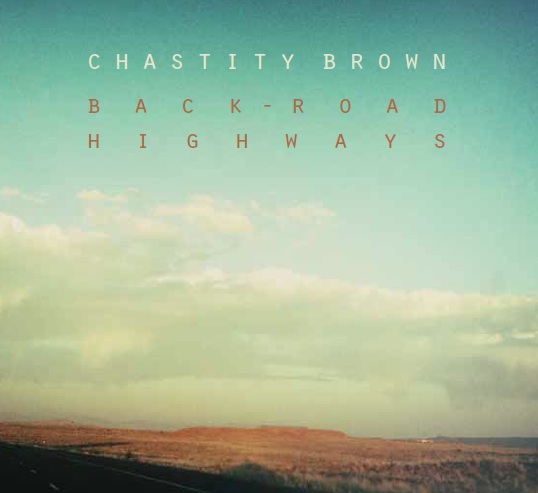
Chastity Brown - Back-Road Highways


When Chastity Brown released Back-Road Highways last March, City Pages announced that she "belongs to no genre, because what she does is beyond folk, blues, soul, or any hyphenated combination of those categories." Then in August they named her Best Folk Artist because "at least the platform of folk is broad enough to hold her." In 2010 she had been "a rocker with gospel grounding." On her last album she snarled, would you like a definitionTwo months ago CMT proposed "Americana Soul." Chastity suggested, Here's another colored woman with a guitar

To me the problem with genre is less that it's a shortcut and more that it can keep us from listening. None of the classifications above are wrong, exactly. But three years ago Chastity Brown gave us a fantastic response to these attempts. You say you want to know me/that you'd like to understand/where exactly I came from/the type of person that I am. If you did, you only had to listen to the rest of "Bluegrassy Tune", her eight-minute autobiography from 2009's SankofaOr you could listen to its shorter incarnation as "Bound to Happen" on 2010's High Noon TeethAnd if you were really pressed for time you could skim her interview with GuanteThere is more to this human experience than just one thing. 

I first heard Chastity Brown after I had just finished reading If Beale Street Could TalkShe was playing with her band at the Clown Lounge in mid-July and I had been thinking about the part in Beale Street where Sharon goes on an impossible errand to some hip nightclub in Cuba. The band on stage is singing "My Lord and I." 
That song is Birmingham, her father and her mother, the kitchens, and the mines. She may never, in fact, ever have particularly liked that particular song, but she knows about it, it is part of her. She slowly realizes that this is the song, which, to different words if words indeed there are, the young people on the bandstand are belting, or bolting out. And they know nothing at all about the song they are singing: which causes Sharon to wonder if they know anything about themselves at all
Sharon should have come to the Clown Lounge. Chastity Brown sounds like she knows about the songs she is singing - play almost any track on Back-Road Highways next to "Go Up Moses" - but she also sounds like she knows about herself. She and her band can stretch "Leroy" or "Sunday Morning" or "Slowly" until the guitar bleeds like tears. Then they'll hit you with "After You", which is one of the most goddamned exuberant songs I have ever heard. 


That night she closed with "Summertime" from Porgy & Bess. I had never particularly liked that particular song. I had never felt like I knew about that particular song. And that particular song had certainly never felt like it was a part of me. But then The Chastity Brown Band burned through their smoldering cover and Chastity speculated, I wonder what Gershwin would say if he heard this. He'd probably be like, what?

Maybe. But that response sounds like someone hung-up on genre, and that seems unlikely from the "Rhapsody in Blue" guy. It seems more likely that Gershwin would have heard "Bluegrassy Tune" or "Bound to Happen" and understood biography supplanting genre. Sometimes listening to people who know themselves helps us to know ourselves a little better. Gershwin would have appreciated the effort. 

One of my favorite music quotes comes from Matthew Houck answering a question about the songs on his Willie Nelson tribute album. They were my earliest musical memories, though some of them I heard later on

Chastity Brown made "Summertime" sound that way for me.  

Bob Dylan - Highway 61 Revisited


Rolling Stone has this thing at #4. Say what you will about Rolling Stone, or about Bob Dylan, this is the kind of album you know even if you don't actually know. 

That's been my experience, anyway. Until April I hadn't listened to these songs as an album, front-to-back. I'd only met them on Greatest Hits collections, in documentaries, and in sundry disparate circumstance. It was like I'd been letting other people get my kicks for me. Listening now makes me wonder, if I had grabbed this album instead ofGreatest Hits Vol. I when I was at Record Express before a cello lesson some afternoon, would I have gone to law school? 

Bob Dylan played Hartford with Paul Simon on July 24th, 1999. Matt, Jay and I had GA tickets on the lawn at the new half-covered amphitheater. My girlfriend also attended. She got her ticket through her Dad's Audi dealership on the morning of the show. It came with a parking spot and a free buffet. She preferred Paul Simon's set. So did the Hartford Courant's reviewer. Neither had appreciated the drunk people shouting, how does it feeeeeeeeel? 

Of course I preferred Dylan's set. (I had just read this now-archived New Yorker article and I had been excited to hear him "make a mess of the songs.") My girlfriend and I had this only-half-imaginary conversation after the show:

Tom's Girlfriend: I did not like the Bob Dylan. 
Tom: Really? I thought some of those guitar parts were cool. 
Tom's Girlfriend: That wasn't him. That was his guitar player.
Tom: Hmmm. Something is happening here but you don't know what it is.
Tom's Girlfriend: And the Bob Dylan's voice isn't very pretty.
Tom: You should be made to wear earphones.

This album makes me feel like, whenever you can muster the energy to say "fuck you", you should always and definitely say "fuck you." Or, as Dylan explains on the back of the album, "if you do not know where the Insanity Factory is located, you should hereby take two steps to the right, paint your teeth & go to sleep." (Here he is making similar sense with John Lennon in the back of a cab in 1966.) 

More than anything else, this album makes me think about what is possible and what is chosen. We are, today, concerned about next generations and whether they will appreciate the right influences; whether there are iconic albums or books to which they just will not relate. Dylan's musical innovations on Highway 61 today need contextualization. His lyrical sneer does not. This is the only Dylan album my high school music fans even know. I asked them, then what's mine? 

They told me, where, what is? 

(And also, I hadn't realized that "Deslolation Row" describes actual lynchings that took place in Duluth in 1920.)